Written by Julia Schulz

Fig. 1: Plaster of Edward William Lane by Richard James Lane, 1829.
Biography
Edward William Lane (see fig. 1) was a renowned orientalist, translator and lexicographer born in Hereford, England on September 17, 1801.1 He visited Egypt the first time in 1825 and stayed for about three years during which he explored ancient monuments, refined his skills in the colloquial dialect and studied the local manners and customs.2 During his stay, Lane made acquaintance with other European travelers who, like him, adopted the Eastern lifestyle. These well-known characters include John Gardner Wilkinson, James Burton, Lord Prudhoe and Robert Hay, with the latter he traveled together up the Nile during his second voyage3 in 1827.4
In the course of these three years in Egypt, he collected information on several parts of the country, among others also about the First Cataract, which however, was published only posthumously by the American University in Cairo Press in 2000 under the title “Description of Egypt”5. The three manuscripts of this publication can be found today in the Bodleian Library6, the Griffith Institute Archives7 and the British Library8.Lane is also known for his publication of “Manners and Customs of the Modern Egyptians” (1836), the English translation of “Thousand and One Nights” (1839-41) and the “Arabic-English Lexicon” (1863-1893) on which he worked until his death in 1876.9
Description of the First Cataract
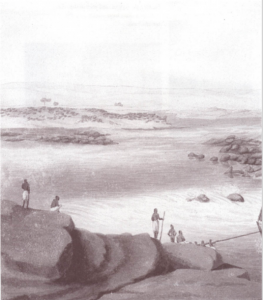
Fig. 2: The First Cataracts, Drawing from Lane’s „Description of Egypt“ (2000).
Lane begins his description of the First Cataract region by painting a scenic picture of the surroundings he encountered while approaching Aswan from the north by boat (see fig. 2). He mentions a ruined convent located about half the height of a mountain, the Qubbet el-Hawa, on the western side of the river Nile. Below this, he describes, are “rude, ancient, sepulchral excavations, having square pillars of rock left to support the ceiling”10, and he expected many more excavations and consequently burials of “the ancient inhabitants of Syene” to be found alongside this mountain. Some of these smaller tombs were still open and accessible during Lane’s visit.11
Lane continues his exploration with the “fertile” island of Elephantine. The island is, to his estimate, flat, mainly composed of cultivable soil and raised towards its southern end.12 He observed two villages and a group of huts that were all inhabited by Nubians (“Bara’bʾreh”). He furthermore claims that from this point onwards there are no Egyptians to be found among the inhabitants of the Nile valley except for the town of Aswan.13 Lane then goes into detail about the southern end of the island, the site of the ancient town, which was now covered in broken potsherds “and other rubbish” while he notes that Strabo (XVII 1.48) had mentioned a Roman cohort for this place. The walls on the eastern side attracted his attention since the blocks of the southernmost wall were covered with hieroglyphs, obviously in second usage.14 The other wall bore a row of windows and a well-built staircase which was the Nilometer (φρέαρ) also mentioned by Strabo (XVII 1.48). It can be accessed when the river is low by a door at the bottom of it and after ascending fifty set of steps one commences onto the staircase which bears the Nilotic scales.15 He describes in detail the inscriptions of the Nilometer containing the names of contemporary Roman emperors and gives also a first edition of it.16
The island had in Lane’s account two small ancient temples which at the time of his visit had been demolished recently and the material reused for the building of barracks behind Aswan for Muhhamad Alis’ troops in 1822 and for other modern buildings.17 One of the two temples was dedicated to Khnum and the other to Amon-Ra, both dating from the reign of Amenophis III18. Lane notes that there were two temples of Khnum on the island, one mentioned by Strabo (XVII 1.48), but that the other was already destroyed in his time. Of it, only two jambs of a granite portal remained that bore the hieroglyphic name of Alexander the Great.19 A bit further below on the mounds, Lane observed a granite statue of a king in a sitting posture equipped with crook and flail of Osiris that may have borne the name of Ramses III.20
On the southern end of the island, some circular perforations caught Lane’s attention. They looked like wells, some of them seemed to have been created by nature and some appeared to be of artificial origin. They were partly filled with rubbish and around some of them Lane found “heaps of dried and broken human bodies…”21 and speculated that these may have been the remains of ancient Egyptians. However, another of his observations was almost more spectacular: after a fellow traveler had drawn his attention to a narrow, horizontal cavity in a thick wall among the mounds they jointly removed the bricks that had closed the cavity and discovered human bodies wrapped in linen. When they tried to remove the linen from what they thought to be mummies they were stopped by locals crying out that they were disturbing the remains of Muslims.22
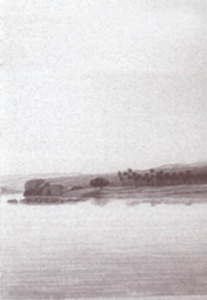
Fig. 3: Aswan and part of the island of Elephantine, Drawing from Lane’s „Description of Egypt“ (2000).
The remains of the old Arab town, built where Roman Syene was once located, lies south of modern Aswan and is the next destination on Lane’s journey. He mentions a brick pier to be found at the edge of the old town close to where parts of the ancient site have been built over by the modern inhabitants of Aswan (see fig. 3). In the past, so Lane, it was mistaken for the remains of a bridge, but must instead have been the Nilometer attributed by al-Maqrizi to Amr b. Al-Az.23 He sees this confirmed by the name the modern inhabitants of Aswan have given this construction, namely el-Mickya (“or the Nilometer”).24 However, as recent archaeological studies by Horst Jaritz made clear, this must have been the church of St. Psoti, that he dated roughly in the early Muslim period.25
By digging in the rubbish heaps of the ancient town, Lane explains, it is possible to find Arab coins made of copper as well as Arab glass weights and beads. He himself was able to buy three of these small copper coins and eight glass weights in the modern town. All of them with inscriptions in the Koo’fee (Old Arabic) characters but not all legible. One of the coins on one side read “There is no deity but God, alone” and on the reverse “Mohham’mad is God’s Apostle”. On one of the glass weights Lane managed to decipher the part “In the name of God. The weight of half…”.26
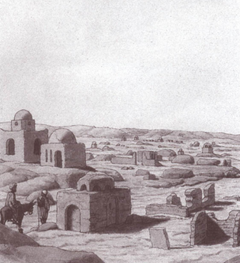
Fig. 4: The old Arab cemetery of Aswan, Drawing from Lane’s „Description of Egypt“ (2000).
The next location in Lane’s description of the First Cataract region is the old Arab Cemetery south of the ancient town (see fig. 4), which to its east has the ancient stone-quarry with the well-known unfinished obelisk.27 Through the old burial ground goes the highly frequented route towards Philae where the boats carrying cargos from and to the south set sail.28
Modern residents of Aswan call the cemetery Sahha’beh (Companions of the Prophet) which according to Lane derives from the fact that among the earliest burials were those of the soldiers of the first Arab army that took over Syene and founded the ancient Arab town. However, as he added, he was not able to find any of these individuals among the graves, but mostly tombs that dated between the years 1019 and 1039 CE.29 He goes on by describing the graves, which were constructed with crude brick and were plastered or white-washed.30 Lane finds many small tablets or tombstones also inscribed with old Arabic characters.31 These are commonly in the flexuous style, which, as he states, came into use in the fourth century and was mistakenly called “the Karmatic character” by European Orientalists contemporary to Lane.32 These inscriptions often begin with sentences from the Koran to which is mostly added “O God! Bless our lord Mohham’mad, and his pure family, and his companions”, followed by the name of the deceased and the date of death.
- Badger 1877, 483. ↩
- Lane 2000, x. ↩
- Lane travelled twice as far as the Second Cataract in Nubia. The first trip took seven and a half months from mid-March until the end of October 1826 and the second six months from mid-June until mid-December 1827 (Lane 2000, xii). ↩
- Lane 2000, xi-xii. ↩
- However, some chapters of Lane’s “Description of Egypt“ had already been published in 1896 by his great-nephew and biographer Stanley Lane-Poole under the name “Cairo Fifty Years Ago“ (Lane 2000, xxix-xxv). The two most important sources for this publication, as well as the final edition, were the “Khitat” by al-Maqrizi and Abd al-Rahman al Jabarti’s “ʿAja’ib al-athar” (Lane 2000, xii). ↩
- 1st draft dated ca. 1829, Bodleian Library, MS Eng. misc. D. 234 (Lane 2000, xiv-xv). ↩
- 2nd draft, submission to the publishing house of John Murray in 1831, Griffith Institute Archives, Lane MSS 6.1 (Lane 2000, xv-xvi). ↩
- 3rd draft, British Library, Department of Manuscripts, Additional MSS 34080-34088 (Lane 2000, xix). ↩
- Badger 1877, 483-484. ↩
- Lane 2000, 417. ↩
- Lane 2000, 417. ↩
- Lane 2000, 417. ↩
- Lane 2000, 418. ↩
- Lane 2000, 418. Lane observes also other hieroglyphic stones in second usage, for instance, in the ruined walls of a quay on which he saw “a reclining figure of a river-god, in the Roman style, and ill executed”, ct. p. 422. ↩
- Lane 2000, 418. ↩
- Lane 2000, 420 (= Prose sur pierre 65 = Th.Sy. 252). ↩
- Lane 2000, 422; 424. ↩
- 9th ruler of the 18th Dynasty, 1388-1351/50 BCE (Beckerath 1999, 286). ↩
- 1st Argead ruler (in Egypt), 332-323 BCE (Beckerath 1999, 288). Lane 2000, 422. ↩
- 2nd ruler of the 20th Dynasty, 1183/82-1152/51 BCE (Beckerath 1999, 288). Lane 2000, 422. ↩
- Lane 2000, 422. ↩
- Lane 2000, 422-423. ↩
- Lane 2000, 67. Arab commander that led the Muslim conquest of Egypt in 639-640 CE, while the southern border could only be secured in 651/2 CE after a peace treaty with the Nubians (Sijpesteijn 2009, 440-441). ↩
- Lane 2000, 425. ↩
- See H. Jaritz, Die Kirche des Heiligen Psôti vor der Stadtmauer von Assuan, in: Mélanges Gamal Eddin Mokhtar, vol. 2 (Cairo 1985) 1-19. ↩
- Lane 2000, 429. ↩
- Lane 2000, 429. ↩
- Lane 2000, 430. ↩
- Lane 2000, 429. For earlier dates see, however, the publication of ʿAbd al-Raḥman M. ʿAbd al-Tawab, Stèles Islamiques de la Nécropole d’Assouan, 3 vols. (Cairo, Imprimerie de l’Institut Français d’Archéologie Orientale, 1977). ↩
- For a recent study of the cemetery, cf. the forthcoming publication by Speidel; Nogara 2021. ↩
- Most of these tombstones were removed after a heavy rainfall in 1887 and are now stored in the museums of Cairo and Aswan with few exceptions, which are kept in European, American, or private collections (Creswell 1952, 131-133). ↩
- Lane 2000, 429. ↩